
THE EU AS A GLOBAL PLAYER

THE EU AS A GLOBAL PLAYER


4,80 €
IVA incluido
Sin Stock
Editorial:
FUNDACIÓN UNIVERSITARIA SAN PABLO CEU
Año de edición:
2020
Materia
Humanidades y sociedad
ISBN:
978-84-18463-01-3
Páginas:
104
Encuadernación:
Otros
Colección:
EBOOK
4,80 €
IVA incluido
Sin Stock
Añadir a favoritos

It has now been almost two years since the Treaty of Lisbon took effect. The time was characterized by an intensive and controversial discussion between the European Union (EU) institutions and member states on the setup of arguably the most important institutional innovation besides the new post of the High Representative of the Union for Foreign Affairs and Security Policy (HR): the European External Action Service (EEAS).The EEAS has the purpose of serving its head, HR Ashton, in fulfilling her tasks of, inter alia, conducting the EU's Common Foreign and Security Policy (CFSP) and increasing the efficiency and coherence of EU external relations. Regarding hither to the execution of EU foreign policy, the HR admitted in the run-up to the establishment of the EEAS that “the EU can be too slow, too cumbersome and too bureaucratic”1. With the setup of the new diplomatic service the EU wished to overcome occurring difficulties that result out of the complex net of responsibilities that characterise the external relations of the EU and thus ‘give the EU a stronger voice around the world, and greater impact on the ground'2.Given the fact that the EEAS constitutes a whole new de facto institution without predecessor and was therefore built from scratch,it is very interesting from a political scientist point of view to see where and how the new service is positioned in the institutional architecture of the EU system. Since the EEAS was ought to bring together rather intergovernmental (e.g. CFSP) and supranational (e.g. development cooperation) policy spheres of EU external action, a discussion on how it can be scrutinized by grand theories of European integration seems to offer valuable insights.In section 2 this research paper first takes a deeper look at two of the most influential grand theories of European integration, neofunctionalism and intergovernmentalism. Basic assumptions and logics of the two approaches will be used to build indicators with which the overall research question of the analysis will be assessed: ¿can the two grand theories explain the institutional setup of the newly established EEAS? The empirical examination of the topic,which will mainly be based on the relevant treaty provisions and the existing decisions and reports of the EU institutions on the EEAS, follows in section 3 of the paper. Furthermore, findings of various academic articles that dealt with the EEAS in the last two years are taken into account. A conclusion summarizes the results of the analysis in section 4.


Artículos relacionados

  • LOS ROMANOS
    FIONA WATT
    Un fascinante libro de pegatinas con más de 300 ilustraciones para dar vida a la antigua Roma. Podrás ver gladiadores en acción en el Coliseo, explorar un campamento romano lleno de soldados, asistir a un banquete extravagante en la casa de un senador y descubrir muchas otras escenas de la vida cotidiana de los romanos. ...
    Sin Stock

    6,95 €

  • LA SALUD MENTAL NO EXISTE
    JOSE LUIS MARIN
    No hay lugar para un cerebro lúcido en un cuerpo agotado ni para una vida en calma en una sociedad enferma. Durante décadas hemos separado la mente del cuerpo como si fueran piezas separadas. Médicos y psicólogos suelen tratar síntomas aislados sin atender al cuadro general ni indagar en las verdaderas causas de nuestro malestar. José Luis Marín, uno de los médicos psicoterapeu...
    Sin Stock

    21,95 €

  • REPUBLICANAS
    VILLENA, MIGUEL ANGEL
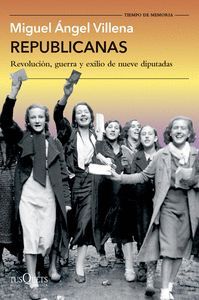
    Nueve diputadas durante la Segunda República espa?ola; nueve mujeres que fueron la punta de lanza de la lucha feminista y el progreso social.La Segunda República espa?ola vivió tres legislaturas entre 1931 y 1939. En ese periodo, solo nueve mujeres ocuparon un esca?o en las Cortes. Nueve, entre centenares de diputados varones. Cuatro de ellas hicieron historia parlamentaria por...
    Sin Stock

    22,90 €

  • ROMANAS. VOCES RESCATADAS
    CRISTINA ROSILLO L¢PEZ
    Roma, nombre de mujer, ciudad encarnada en diosa. Y, sin embargo, cuando se narra su historia, no escuchamos las voces de las romanas, enmudecidas en unas fuentes escritas por y para los hombres. ¿Podemos rescatar esas voces, podemos desafiar un silencio milenario e intentar recuperar lo que emperatrices, libertas o esclavas dijeron y sintieron Cristina Rosillo López, reconocid...
    Sin Stock

    26,95 €

  • ENEMIGOS DE ROMA
    TORRES ZALBA, JUAN
    Julio del año 133 a. C. Una parte del Senado se dirige al Capitolio, en donde se vota la segunda elección al tribunado de la plebe de Tiberio Sempronio Graco, al que acusan de querer proclamarse rey de Roma. En el tumulto que se forma, Tiberio y trescientos de los suyos son apaleados hasta la muerte. Es la primera vez que un conflicto político termina bañado en sangre, y desata...
    Sin Stock

    27,90 €

  • MANUAL DE CONVIVENCIA
    MORENO, JUANMA
    Un testimonio sincero y humano que combina memorias políticas y personales.En 2018, lo que parecía imposible ocurrió y, tras casi cuarenta años de hegemonía socialista en el Gobierno de Andalucía, Juanma Moreno, candidato del Partido Popular, se convertía en el presidente del Gobierno del cambio.Buena gestión, eficacia, maneras políticas sosegadas y abiertas al diálogo, y situa...
    Sin Stock

    21,90 €