

GLOBAL FORESIGHT AND INNOVATIO, ARUP
Table of contents:
Social set
01. Ageing Population
02. Communication
03. Education For All
04. Fear
05. Future Households
06. Holistic Wellness
07. Identity
08. Literacy
09. Personal Productivity
10. Population Distribution
Technological set
11. Atomic Engineering
12. Biometric Identification
13. Biomimetics
14. Biotech Society
15. Connected Communities
16. Energy Infrastructure
17. Preventative Care
18. Radio Frequency Identification (RFID)
19. Smart Dust
20. Wearable Computing
Environmental set
21. Aviation
22. Consumption Localization
23. Disposable Quality Goods
24. Ecological Footprint
25. Endangered Species
26. Energy Use
27. Travel
28. Urbanization
29. Waste
30. Water
Economic set
31. Airport Shopping
32. Containerized Cargo
33. China Trade
34. Consumer Debt
35. Democratization of Luxury
36. Digital Currency
37. Global Trade
38. Migration
39. Outsourcing
40. Wealth Gap
Political set
41. Asianization
42. Compensation Culture
43. Ethical Investment
44. Global Governance
45. Food Legislation
46. Pensions
47. Strife
48. Surveillance Society
49. Trading Blocs
50. The Vote
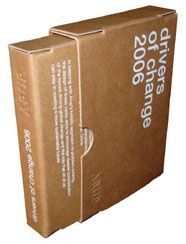
What will our world be like in 2050? This set of cards identifies some of the leading drivers of change that affect our future. The drivers are arranged and presented within societal, technical, economic, environmental and political domains known as the STEEP framework. Each carefully-designed card depicts a single driver. The set was devised by the Foresight and Innovation team at Arup, a group tasked with exploring emerging trends and how they impact upon the business of Arup and its clients. This publication serves not only as a vibrant visual record of research, but also as a tool for discussion groups, personal prompts, for workshop events or as a 'thought for the week'.
Arup is a global design and engineering firm and a leading creative force in the built environment. It was founded 60 years ago by the engineer and philosopher, Sir Ove Arup, who instigated the concept of 'total design', in which teams of professionals from diverse disciplines work together on projects of exceptional quality. This integrated-design approach has been the hallmark of Arup's achievements, visible in the design of the structure of the Sydney Opera House in the 1960s, in the development of the alternative route for the UK's Channel Tunnel Rail Link in the 1990s, and in the current masterplanning of the world?s first eco-city at Dongtan, Shanghai, China.
In keeping with Arup's holistic approach to problem-solving, the design of these cards aims to encourage deeper consideration of the forces driving global change and the role that all of us can play in creating a more sustainable future.